
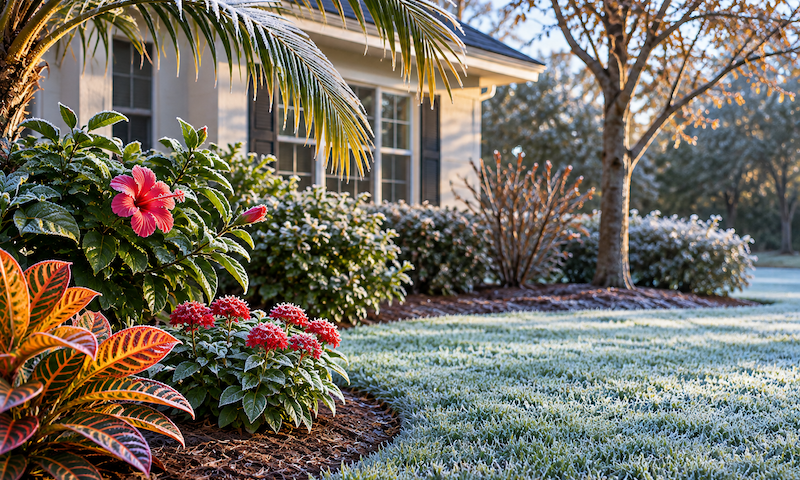
How Do I Get My Florida Landscape Ready for Winter?
Quick Answer: To prepare your Florida landscape for winter, adjust your lawn care routine, reduce irrigation as temperatures cool, clean up leaves and debris, protect tropical plants from freezing temperatures, and avoid late-season fertilization and unnecessary pruning. Even though Northwest Florida winters are milder than those in many other parts of the country, occasional freezes can damage lawns, shrubs, flowers, and tropical plants.
For homeowners in Niceville, Freeport, Destin, and surrounding Northwest Florida communities, November is a good time to prepare outdoor spaces for cooler weather. A little seasonal maintenance can help your landscape stay healthy through winter and recover when spring arrives.
What Should I Do to My Florida Landscape Before Winter?
Start by cleaning up your yard, checking your irrigation system, and identifying plants that may need protection from cold weather.
Your winter landscaping checklist should include:
Remove fallen leaves and accumulated yard debris.
Clear weeds from landscape beds.
Check irrigation systems for leaks or misdirected sprinklers.
Reduce watering as lawn and plant growth slows.
Add or refresh mulch around trees and planting beds.
Remove dead or damaged plant material when appropriate.
Identify tropical plants that may need frost protection.
Check trees and shrubs for damaged or unstable branches.
These steps help maintain a neat appearance while preparing your landscape for seasonal temperature changes.
How Should I Prepare My Florida Lawn for Winter?
Florida lawns generally need less water, fertilizer, and mowing during winter because warm-season grasses naturally slow their growth.
In Northwest Florida, grasses such as St. Augustine, Bahia, and Zoysia may become partially dormant as temperatures drop. Some lawns remain green, while others turn brown temporarily. This is a normal seasonal response.
To prepare your lawn:
Adjust watering: Reduce irrigation as grass growth slows and rainfall patterns change.
Maintain proper mowing height: Avoid cutting grass too short.
Avoid late fertilization: North Florida lawns generally should not be fertilized after mid-September.
Watch for pests and disease: Cooler weather does not eliminate every lawn problem.
Avoid unnecessary treatments: Don’t try to force dormant grass to stay green.
UF/IFAS recommends avoiding winter fertilization in North Florida because encouraging new growth before cold weather can make grass more vulnerable to injury. <Cite refs={[“turn657146search1″,”turn657146search2″,”turn657146search6”]}/>
How Do I Protect Florida Plants From Freezing Temperatures?
Protect tropical and cold-sensitive plants by moving containers to sheltered areas and covering vulnerable landscape plants when frost or freezing temperatures are forecast.
Although Northwest Florida has a relatively mild winter climate, temperatures can occasionally drop enough to damage tropical plants and other sensitive landscaping.
Before a freeze:
Move potted tropical plants into a garage, covered patio, or sheltered location.
Keep frost blankets or plant covers available.
Cover vulnerable plants before temperatures drop.
Make sure plant coverings extend to the ground to help trap warmth.
Add mulch around plant roots to help insulate the soil.
Monitor local weather forecasts for freeze warnings.
UF/IFAS recommends using frost cloth or similar coverings that extend to the ground. Remove coverings once temperatures rise above freezing.
Avoid using ordinary home sprinkler systems to protect plants from freezing. These systems are not designed for continuous freeze-protection irrigation and can create additional problems. <Cite refs={[“turn657146search0″,”turn657146search3″,”turn657146search4”]}/>
Should I Fertilize My Florida Lawn in the Winter?
Generally, no. Homeowners in Northwest Florida should avoid fertilizing established lawns during winter.
Warm-season grasses naturally slow down as temperatures decrease. Applying fertilizer when grass is not actively growing can encourage tender new growth that is more susceptible to cold damage.
For North Florida lawns, UF/IFAS recommends ending routine fertilizer applications around mid-September. Homeowners should wait until spring growth resumes and follow recommendations for their specific grass type.
If your lawn looks brown during winter, don’t automatically assume it needs fertilizer. Seasonal dormancy is often the reason. <Cite refs={[“turn657146search1″,”turn657146search2”]}/>
How Often Should I Water My Florida Landscape During Winter?
Most established Florida lawns and landscape plants need less frequent watering during winter than during the warmer months.
Cooler temperatures, shorter days, and slower plant growth reduce water requirements.
However, the right irrigation schedule depends on rainfall, soil conditions, plant types, and whether landscaping is newly installed.
Keep these tips in mind:
Reduce automatic sprinkler schedules as temperatures cool.
Check soil moisture before watering.
Avoid watering when the ground is already saturated.
Inspect sprinkler heads for leaks or poor coverage.
Pay special attention to newly planted trees and shrubs.
Water when extended dry conditions make it necessary.
UF/IFAS notes that North Florida lawns may need irrigation only every few weeks during winter, depending on rainfall and conditions. Newly installed plants have different watering needs and may require more frequent attention while establishing their roots. <Cite refs={[“turn657146search2″,”turn657146search6″,”turn657146search9”]}/>
Should I Prune Trees and Shrubs Before Winter?
Avoid heavy pruning of cold-sensitive plants in late fall because it can encourage new growth that is more vulnerable to freezing temperatures.
Instead, focus on removing clearly dead, damaged, or hazardous branches when appropriate.
For many tropical and ornamental plants, it is better to wait until spring to perform significant pruning. If a freeze damages your plants, resist the urge to immediately cut everything back. Waiting allows you to identify which branches and stems are actually damaged.
UF/IFAS recommends postponing major pruning of cold-injured plants until new growth appears in spring. <Cite refs={[“turn657146search0″,”turn657146search3”]}/>
What Landscaping Projects Should I Complete Before Winter?
Winter is a good opportunity to complete landscape cleanup, refresh planting beds, inspect irrigation, and improve the overall appearance of your property.
Consider completing these projects before colder weather arrives:
| Landscaping Project | Why It Helps |
|---|---|
| Fall and winter cleanup | Removes leaves and accumulated debris |
| Mulch installation | Helps protect roots and improve planting beds |
| Weed removal | Keeps landscape beds cleaner |
| Irrigation repairs | Helps prevent wasted water |
| Tree and shrub maintenance | Addresses appropriate seasonal maintenance needs |
| Sod installation | Can be planned around suitable weather and site conditions |
| Plant installation | Allows homeowners to improve landscape appearance with appropriate seasonal selections |
Choosing the right plants for Northwest Florida’s climate is especially important. Cold-tolerant varieties can help reduce the amount of winter protection your landscape requires.
FAQs About Preparing Florida Landscapes for Winter
Do Florida lawns turn brown in winter?
Yes. Many warm-season grasses naturally slow down or become dormant during colder weather. Brown or yellow grass does not necessarily mean your lawn is unhealthy.
Should I cut my grass shorter before winter?
No. Avoid scalping your lawn. Maintaining the appropriate mowing height helps protect grass and supports healthier spring recovery.
When should I cover plants for a Florida freeze?
Cover sensitive plants when frost or freezing temperatures are forecast. Use appropriate frost cloth or breathable coverings that extend to the ground.
Should I water my lawn less in winter?
Yes, established lawns generally need less irrigation during cooler months. Adjust your sprinkler schedule based on rainfall, soil moisture, and local conditions.
Is winter a good time to landscape in Northwest Florida?
Yes, certain landscaping projects can be completed during winter. Cleanup, irrigation improvements, mulch installation, and appropriate plant installations can help maintain your property throughout the season.
Myths vs. Facts
Myth: Florida lawns should stay green all year.
Fact: Many warm-season grasses naturally lose some color or become dormant during winter.
Myth: More fertilizer will help grass survive cold weather.
Fact: Late-season fertilization can encourage vulnerable new growth.
Myth: Florida plants don’t need freeze protection.
Fact: Tropical and cold-sensitive plants can suffer damage during occasional Northwest Florida freezes.
Myth: You should immediately prune plants after a freeze.
Fact: Waiting until spring growth appears can help you identify which portions of a plant need to be removed.
Key Takeaways
Prepare your landscape before colder temperatures arrive.
Reduce irrigation as grass and plants grow more slowly.
Avoid fertilizing established North Florida lawns during winter.
Protect tropical plants when freezing temperatures are forecast.
Avoid heavy pruning of cold-sensitive plants in late fall.
Keep lawns and landscape beds clean and properly maintained.
Choose plants suited to Northwest Florida’s climate.
Get Your Northwest Florida Landscape Ready for Winter
Winter preparation doesn’t have to be complicated, but the right maintenance can make a difference in how your property looks and performs throughout the season.
Valerio’s Landscaping provides lawn care, landscape maintenance, irrigation services, plant installation, sod installation, and seasonal cleanup for homeowners in Niceville and surrounding Northwest Florida communities.
Whether you need help refreshing your landscape beds, preparing your lawn for cooler weather, or maintaining your outdoor space, Valerio’s Landscaping can help you keep your property looking its best throughout the year.
