
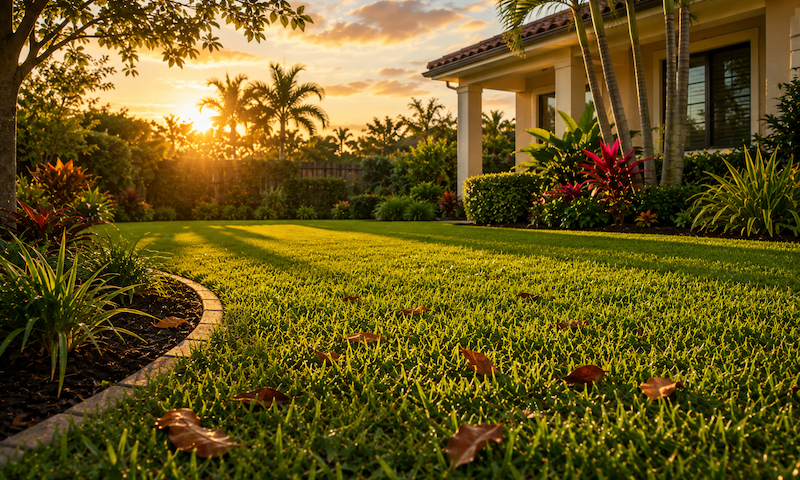
To prepare your Freeport Florida lawn for fall, adjust your irrigation, continue mowing at the proper height, address weeds and bare spots, check for pests and disease, and fertilize only when appropriate for your grass type and location. Florida lawns don’t experience the same fall conditions as lawns farther north, but cooler temperatures and shorter days still change how grass grows and what it needs.
Fall is a good time to help your lawn recover from the heat and heavy activity of summer while preparing it for slower growth during the cooler months.
Does Florida Lawn Care Change in the Fall?
Yes, Florida lawns generally need less water and fertilizer as temperatures and growth rates decrease.
Warm-season grasses such as St. Augustinegrass, zoysiagrass, bahiagrass, and centipedegrass respond to seasonal changes. As temperatures cool and daylight decreases, growth typically slows.
That means your summer lawn-care routine may need to be adjusted rather than continued on the same schedule.
How Often Should I Water My Florida Lawn in the Fall?
Your lawn generally needs less frequent irrigation in fall, but you should adjust watering based on rainfall, grass type, soil, and signs of water stress.
UF/IFAS recommends watering established Florida lawns based on need rather than automatically following the same timer schedule throughout the year. Signs of drought stress can include:
- Grass blades folding lengthwise
- A blue-gray appearance
- Footprints remaining visible after walking across the lawn
Florida’s sandy soils can drain quickly, but overwatering can also contribute to disease and weed problems.
Watering in the early morning is generally recommended, and irrigation should be reduced or paused when rainfall is providing enough moisture.
Fall Irrigation Checklist
- Adjust your irrigation timer for the season
- Check sprinkler heads for uneven coverage
- Repair broken or clogged heads
- Don’t irrigate immediately after significant rainfall
- Follow local watering restrictions
- Watch the lawn for signs of drought stress
Should I Fertilize My Freeport Florida Lawn in the Fall?
Fertilizer timing depends on your grass type, location in Florida, local regulations, and the time of year.
This is one area where Florida homeowners should avoid using a one-size-fits-all approach.
In some parts of Florida, fertilizer restrictions apply during the summer rainy season. When those restrictions end, an appropriately timed fall application may help support the lawn before cooler weather slows growth. However, fertilizing too late can encourage new growth when the grass is becoming less active.
Before applying fertilizer:
- Check your local fertilizer ordinance
- Know your grass type
- Consider a soil test
- Follow the fertilizer label
- Avoid fertilizing before heavy rain
- Don’t apply more fertilizer than recommended
South Florida can have a longer growing season than North Florida, so recommendations can vary significantly across the state.
How Should I Mow My Florida Lawn in the Fall?
Continue mowing as needed, but avoid cutting your grass too short.
The ideal mowing height depends on the type of turfgrass. Maintaining the appropriate height gives the grass enough leaf surface for photosynthesis and can support deeper roots and better tolerance to drought and shade. Cutting too short can stress the lawn and make it more vulnerable to weeds, insects, and disease.
A few fall mowing tips:
- Keep mower blades sharp
- Don’t remove excessive amounts of grass at one time
- Avoid mowing wet grass when possible
- Follow the recommended height for your grass type
- Leave normal grass clippings on the lawn
Should I Treat Weeds in the Fall?
Fall can be a good time to identify and address weeds before they become a bigger problem.
Look for weeds developing throughout the lawn, particularly in thin or stressed areas.
Before using a herbicide, identify the weed and make sure the product is appropriate for your specific turfgrass. Applying the wrong product can damage the lawn.
Improving mowing, irrigation, and overall turf health can also make your lawn more competitive against weeds.
Should I Check My Lawn for Pests and Disease?
Yes, inspecting your lawn in fall can help identify problems before they become more difficult to manage.
Look for:
- Brown or thinning patches
- Discolored grass
- Unusual spots or lesions
- Areas that remain excessively wet
- Signs of insect activity
- Rapidly spreading areas of damaged grass
Not every brown patch means the lawn needs more water or fertilizer. Overwatering, disease, insects, nutrient issues, and environmental stress can all cause similar symptoms.
What Should I Do About Bare or Thin Areas?
Fall is a good time to evaluate thin areas and determine why the grass isn’t growing properly.
Before replacing damaged turf, determine what caused the problem.
Possible causes include:
- Poor drainage
- Too much shade
- Compacted soil
- Irrigation problems
- Insects or disease
- Heavy foot traffic
- Improper mowing
Simply adding new grass without correcting the underlying problem may result in the same issue returning.
How Can I Prepare My Freeport Lawn for Florida’s Cooler Months?
The best preparation is to gradually adjust your lawn-care routine as growth slows.
Your fall checklist should include:
- Adjust irrigation
- Inspect your sprinkler system
- Continue proper mowing
- Check for weeds
- Inspect for pests and disease
- Address drainage problems
- Evaluate thin or damaged areas
- Fertilize only when appropriate
- Clean up excessive debris from the lawn
Florida’s fall is mild compared with much of the country, but shorter days and cooler temperatures still reduce lawn growth. Preparing early can help your turf transition into the cooler season in better condition.
Frequently Asked Questions
Should I water my Florida lawn less in the fall?
Generally, yes. As temperatures and growth decrease, lawns typically require less irrigation. However, rainfall, grass type, soil, and location all affect watering needs.
Should I fertilize my Florida lawn in October?
It depends on where you live and what type of grass you have. Some areas allow and recommend a fall application, while other regions have different timing. Always check local requirements and grass-specific recommendations.
Should I cut my Florida grass shorter for winter?
No. Cutting grass excessively short can stress the turf and increase its vulnerability to weeds, pests, and disease. Maintain the recommended mowing height for your grass type.
Can I plant new grass in the fall?
It depends on the grass type and location. Warm-season turf generally establishes best when temperatures support active growth, so timing is important when installing new sod or renovating a lawn.
Why is my Florida lawn turning brown in the fall?
Brown grass can have several causes, including reduced growth, drought stress, disease, insects, nutrient problems, or environmental conditions. Don’t automatically assume your lawn needs more water.
Fall Lawn Care Myths vs. Facts
Myth: Florida lawns need the same irrigation schedule all year.
Fact: Water requirements change with the season. Irrigation controllers should be adjusted as conditions change.
Myth: More fertilizer will keep my lawn greener.
Fact: Excessive or poorly timed fertilizer can create problems. Fertilizer should be applied according to grass type, location, and local requirements.
Myth: Brown grass always means it needs more water.
Fact: Brown or thinning grass can result from several different problems, including pests, disease, poor drainage, or improper care.
Myth: You should cut your lawn extremely short before winter.
Fact: Mowing too short can stress Florida turfgrass. Maintaining the appropriate height is better for overall lawn health.
Key Takeaways
- Florida lawns need different care as fall temperatures and daylight change.
- Reduce irrigation as your lawn’s water needs decrease, while still watching for drought stress.
- Continue mowing at the appropriate height for your grass type.
- Check for weeds, pests, disease, and irrigation problems.
- Don’t fertilize automatically—timing depends on grass type, location, and local regulations.
- Correct the underlying cause of thin or damaged areas before replacing turf.
- A professional lawn and landscape service can help keep your property healthy through seasonal changes.
Ready to Get Your Freeport Lawn Ready for Fall?
Fall is a great time to evaluate your lawn and make adjustments before cooler weather arrives. Proper irrigation, mowing, fertilization, and seasonal maintenance can help your grass stay healthier throughout the year.
Valerio’s Landscaping can help Freeport Florida homeowners maintain healthy, attractive lawns through every season. From routine lawn maintenance to landscape care and seasonal preparation, professional service can take the guesswork out of keeping your outdoor space looking its best.
